If Punjab cooks with its sleeves rolled up, Awadh cooks in silk. The kingdom that flowered around Lucknow in the eighteenth and nineteenth centuries made refinement its signature in everything — poetry, manners, architecture — and nowhere more completely than in the kitchen. Awadhi cuisine is what happens when a culture decides that cooking is not a chore or even a craft, but a fine art with masters, schools and secrets.
The masters were the khansamas — professional cooks who ran the great kitchens of the Nawabs and the aristocracy, guarding their techniques like family jewels, because they were. A celebrated khansama could name his price. Rival households competed through their tables the way other courts competed through orchestras. Out of this hothouse came a school of cooking whose influence reaches every biryani house and wedding feast in the subcontinent today.
The art of the sealed pot
Awadh's most famous gift is dum pukht — the technique of sealing a heavy-bottomed pot with a rope of dough and letting the dish cook slowly in its own steam, so that nothing escapes: not moisture, not fragrance, not the conversation between the ingredients. The story every Lucknawi will tell you places its flowering in the era of Nawab Asaf-ud-Daula, when enormous sealed cauldrons fed the workers building the Bara Imambara — and the aroma from one opened pot so impressed the court that the technique was summoned from the labour lines into the royal kitchen. However embroidered the tale, the technique is real, and it changed everything.
Dum cooking rewards patience and punishes shortcuts. The biryani goes into the pot in layers — rice, meat, saffron milk, fried onions — and comes out as a single perfumed whole. The korma emerges silken, its sauce so smooth it seems to have no ingredients at all, only effects.
The aromatic register
That sensibility demanded a particular corner of the spice shelf: fragrant rather than fierce. Green cardamom, used with a jeweller's precision. Cinnamon and clove, warm and resonant. Mace and nutmeg, the flower and seed of the same tree, lending depth that guests feel before they can name it. Saffron bloomed in warm milk. Kewra and rose, distilled essences finishing a dish like a signature at the bottom of a letter.
Awadhi spicing is a masterclass in restraint. The heat is gentle; the perfume is everything. A proper Awadhi korma should announce itself from the next room and then, at the table, keep revealing layers — that is the khansama's test, and it is passed with aromatics, not fire.
Beyond the palace walls
The refinement never stayed locked in the court. Lucknow's streets became famous for kebabs of impossible tenderness — the legends of Kakori and the galouti kebab, invented, the stories say, for an aging nawab who had lost his teeth but not his standards. The city's tehzeeb — its famous courtesy — extended to the plate: food should be gentle, considered, beautiful. Even today, Lucknow argues about biryani with the seriousness other cities reserve for politics.
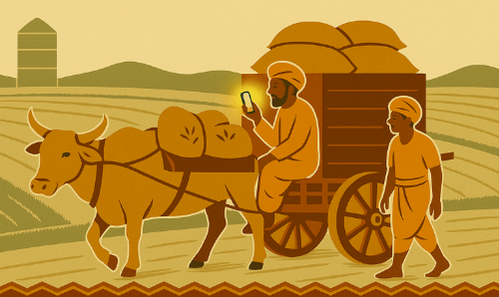
The plains around Awadh fed this culture from some of the subcontinent's richest farmland — the same fertile Gangetic belt that made the region a prize for every empire and a crossroads for the eastern routes.
The dastarkhwan: dining as ceremony
In Awadh, how you serve mattered as much as what you served. The dastarkhwan — the ceremonial spread laid for a meal — was choreography: dishes arranged in deliberate order, sequenced courses, rice perfumed just so, breads timed to arrive warm. Guests were seated with care, served with flourish, and never rushed. The meal was a performance in which everyone, host and guest alike, had a part.
That ceremony shaped the food itself. Dishes were composed to be admired before being eaten — the sheen on a korma, the saffron marbling a biryani, the garnish of slivered nuts and silver leaf. Awadhi cuisine assumes your full attention, which may be the most old-fashioned thing about it and the most worth reviving.
Slow cooking for a fast world
Here is the quiet good news: the Awadhi method is astonishingly compatible with a busy modern kitchen. Dum cooking is, at heart, set-and-seal — layer the pot, close it tight, keep the flame low and walk away. It asks for patience, not attention. A weekend biryani given a proper dum while you do something else entirely will outperform an hour of anxious stirring every single time.
The aromatics do the same favour. Whole cardamom, cinnamon and clove dropped into simmering rice, a few saffron threads bloomed in warm milk, a bay leaf in the dal — minutes of effort, a room full of fragrance. Awadh's lesson was never that refinement requires labour. It was that refinement requires intention.
Awadh also perfected something subtler than any dish: the idea that a cuisine is a heritage to be curated. Recipes were preserved, attributed and argued over; techniques had lineages; a great dish carried its inventor's name down generations. That instinct — that food deserves memory — is the same one that puts a story on the back of every Silk Route pack. The khansamas would have understood our labels immediately. They were writing them, in their own way, two centuries ago.
If you want a single dish to understand Awadh by, make it a slow kheer: rice, milk and patience, perfumed at the end with cardamom and a few bloomed threads of saffron. No fire, no drama — just time turning humble ingredients aristocratic. That transformation is the whole Awadhi argument in a bowl, and it needs nothing from you but the willingness to wait for it.
The route today
Our Central & Eastern route carries the aromatic register of the spice shelf: the cardamom, cinnamon, clove, mace and nutmeg of the royal kitchens, and the warming blends that descend from them — each spice single-origin, each one chosen for fragrance first.
Cook with them the Awadhi way. Go slower than you think you need to. Seal the pot when you can. Let the aromatics do the talking and keep the fire low — and somewhere, a khansama's ghost will nod. Dinner should start announcing itself a room away; with these spices, it will.