Picture the end of the old Silk Route. After the mountain passes and the desert crossings, after the camels and the carts and the ships, every journey finished the same way: a bazaar. A covered market in Samarkand or Delhi or Istanbul, where the treasure finally met the person who would take it home. The bazaar was not just the end of the road — it was the technology of trust. You could see the trader's face, smell the pepper before you paid, ask where it came from and watch the answer being given. For fifteen centuries, that was the last mile.
Then the last mile broke.
What the supermarket lost
The modern grocery shelf moves more food than any bazaar ever did, and it does so brilliantly. But somewhere between the container port and the planogram, the last mile lost the thing the bazaar was actually for. There is no trader behind a supermarket shelf. Nobody to ask where the jar came from, nobody whose face is attached to the claim, nobody vouching. The label does what it legally must, and the rest is silence. For everyday staples, that trade-off was accepted long ago. But for treasures — the foods a family builds its festivals around — the silence costs something real.
There is a second, quieter loss: the shelf itself is locked. Physical retail has finite space, and space goes to whoever fits the category plan. A new brand with a true story waits years for its half-metre of pegboard — and a shopper in a smaller town may never see it at all. The bazaar took anyone with a proven treasure. The shelf takes appointments.
The bazaar in your pocket
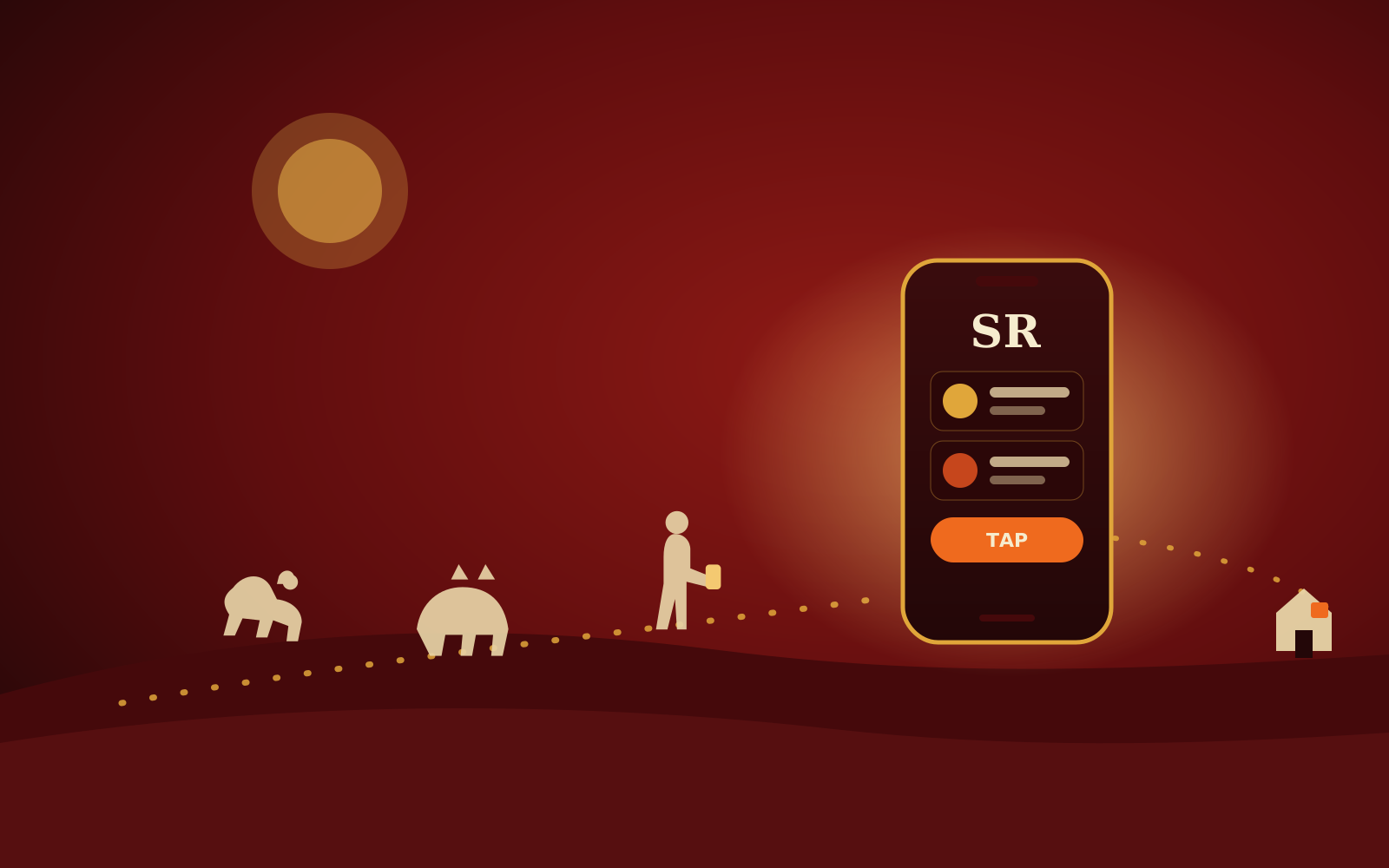
Our answer is on the cover of this story. Look at almost any piece of Silk Route artwork and you will find the same small detail: a trader with a phone in his hand. It is not a joke, and it is not decoration. It is the thesis. The phone is the new bazaar — the one place where a brand can stand in front of you the way a trader stood in front of a customer, with the whole story laid out and nothing between you and the question where does this come from?
That is why every Silk Route treasure is sold digitally-first on GoDirect, delivered across North America. Not because e-commerce is fashionable, but because it restores the three things the old last mile did best — and adds one thing the bazaar never had.
Traceability: the answer, on demand
On a digital shelf, a product page has no space limit. Where a physical label gets a few square centimetres for its story, our pages carry the whole route: the county the butter comes from, the coast the pepper comes from, the way each treasure is made, the promise it travels under. Every jar and pouch links back to its origin story — the same stories you are reading now. In the bazaar you interrogated the trader. On the digital route, the interrogation is pre-answered, in writing, for anyone to check at any hour. A brand that controls its own last mile can afford to be examined.
Reachability: no locked shelves
Digital-first means the caravan reaches everywhere the delivery network reaches — which is to say, across North America — on day one. A family in a town with no South Asian grocery gets the same shelf as a family in the heart of the GTA. No waiting for a category reset, no begging for facings, no geography lottery. The old routes existed precisely to carry treasures to people who could not travel to the source. A locked shelf would have struck the old traders as a broken promise; an open network is simply the route, completed.
Reachability cuts the other way too, and this is the part that matters for the map. Because a digital shelf reports what a physical shelf never could — which treasures are sought, from which towns, in which seasons — the caravan learns its own demand in real time. The old traders spent lifetimes building that knowledge one bazaar conversation at a time. Ours accumulates with every tap, and it decides what the route carries next. When we say a launch is chosen carefully, this is the instrument doing the choosing: not a hunch in a boardroom, but the recorded voice of the kitchens the route already serves.
Convenience: the festival does not wait
And then the practical truth every household knows: Diwali comes on its own schedule. The mithai must be made the week it must be made; the diyas are lit on the night they are lit. A treasure that requires a special trip across the city is a treasure that gets substituted. Tap, and the jar is on its way to your door — sealed fresh, just for you, in time for the festival. Convenience sounds like the least romantic word in commerce until you remember what it buys: the tradition actually happening, in homes that would otherwise have gone without.
What the bazaar never had
Here is the one improvement the old traders would envy. In the bazaar, trust ran one way at a time — one trader, one buyer, one conversation. The digital last mile remembers. The story stays published. The claims stay checkable. A promise made once is made to everyone, permanently, and a brand that breaks it is caught by everyone at once. That is a harder standard than any bazaar ever imposed, and we chose it deliberately. Zero adulteration is easy to say across a market stall; it is braver to print where anyone can hold you to it forever.
So this is the shape of the modern caravan: treasures found at the source, carried the old way in spirit, and handed over the new way — traceable, reachable, convenient, and accountable. Fifteen centuries of route, and then the last mile, which is yours. It is, quite literally, in your hand.
Ancient traditions, just a tap away. We mean every word of it.